Get Your Personal Consultation
Searching for the right solution?
We are happy to consult with you which solutions best fit your needs.
We are happy to consult with you which solutions best fit your needs.


As flexible plastic packaging demand continues to rise worldwide, converters are rethinking how to print more efficiently and sustainably. Choosing the right plastic printing machine can make a major difference in production speed, color quality, and total cost. Among today’s leading options — flexographic (flexo), gravure, digital, and screen printing — flexographic printing stands out for its balance of speed, versatility, and eco-friendly performance, making it a preferred choice for modern packaging lines.
Before comparing specific machine types, let’s define what “plastic printing machines” include and how each printing technology fits different production goals.
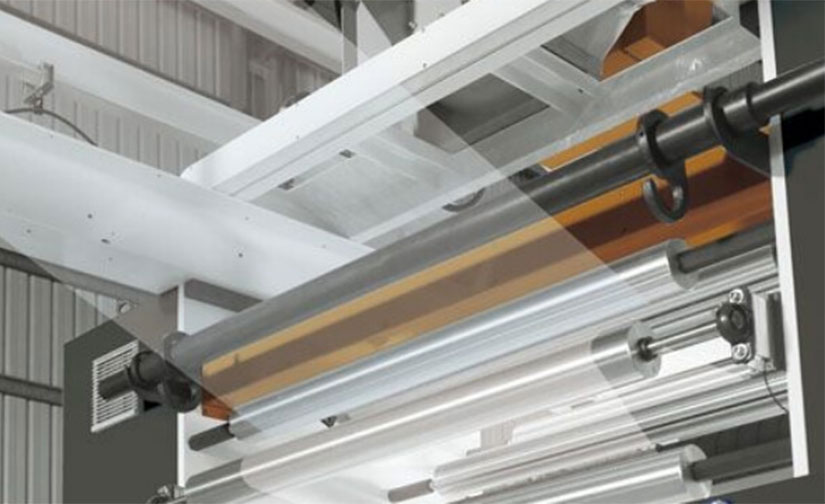
Plastic printing machines are designed to print on flexible substrates such as PE, PP, PET, and PVC films. Each printing technology — flexographic, gravure, digital, and screen — serves a distinct role in packaging production. The table below summarizes where each method performs best.
| Printing Type | Best For | Main Advantage | Limitation |
|---|---|---|---|
| Flexographic Printing | Flexible plastic films (PE, PP, PET, PVC) | Fast setup, low waste, eco-friendly inks | Initial plate cost |
| Gravure Printing | Ultra-long production runs | Unmatched color consistency | High cylinder engraving cost |
| Digital Printing | Short-run or prototype packaging | No plate required, instant color change | High ink cost, slow speed |
| Screen Printing | Rigid materials (containers, sheets) | Thick ink layer, durable finish | Not suitable for thin films |
While each printing method has its own strengths, converters around the world increasingly turn to flexographic printing — thanks to its balance of quality, speed, and cost efficiency.
Let’s take a closer look at why flexo technology has become the dominant force in plastic packaging.
Flexographic (flexo) printing uses flexible photopolymer plates mounted on cylinders to transfer ink onto the substrate. With speeds reaching up to 600 m/min, this technology excels in high-throughput, low-waste production across PE, PP, PET, PVC, and even compostable bio-films.
Now that we’ve seen why flexo leads the market, let’s explore how it adapts to different production scales — through the four major flexographic press types offered by Lung Meng.
Lung Meng offers a full lineup of flexo presses to meet different production scales — from portable inline models for small converters to high-speed CI systems for demanding industrial packaging lines.
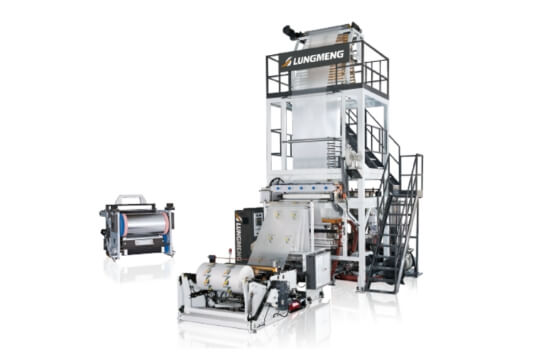
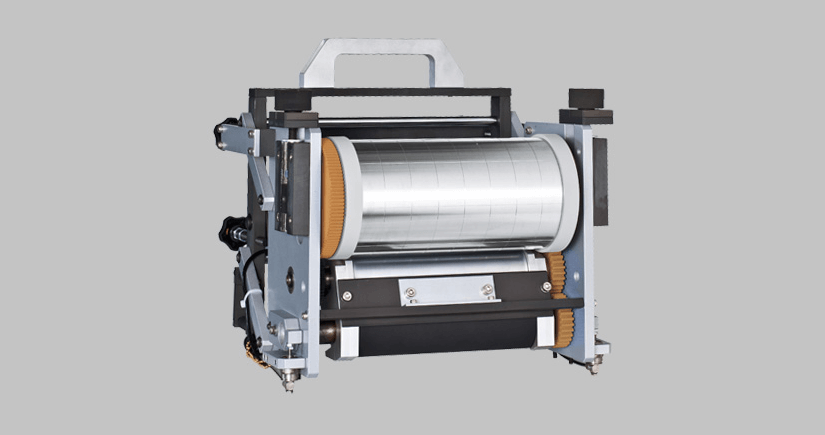
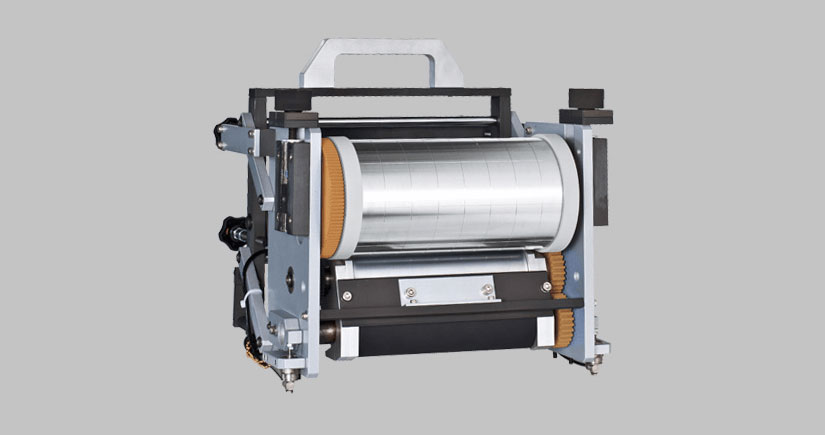
Compact, easy to install, and compatible with other converting lines such as multi-layer blown film machines and bag making machines. No electrical connection is required — ideal for small converters or inline setups.
Highlights:
Learn more Mini Portable Type Flexographic Printing Machine →
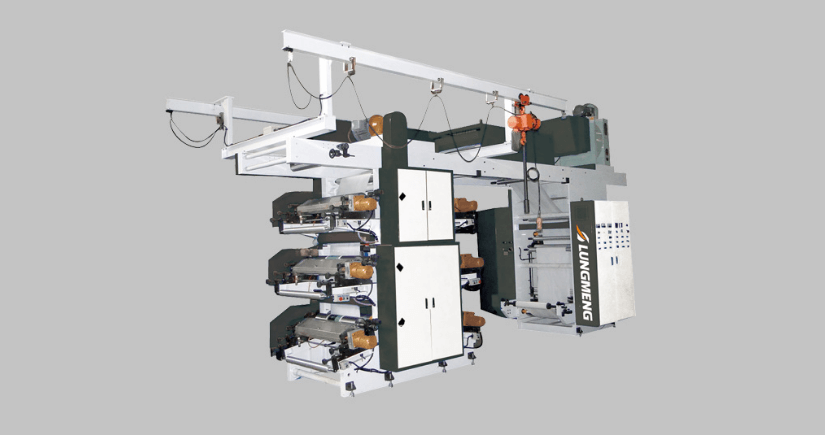
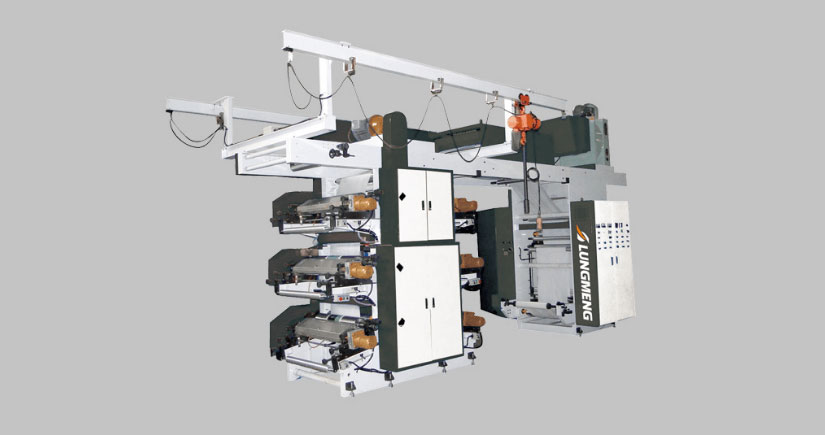
Designed for PE, PP, and paper materials, this press offers fully automatic tension control and a durable frame that ensures stability at high speeds.
It’s the perfect choice for converters expanding into medium-scale production with reliable performance.
Highlights:
View Stacking Type Flexographic Printing Machine product details →
For converters ready to move beyond entry-level systems, the six-color flexo press delivers advanced automation and precision color management.
It supports front and reverse printing, making it ideal for brands with complex designs and multi-layer packaging needs.
Highlights:

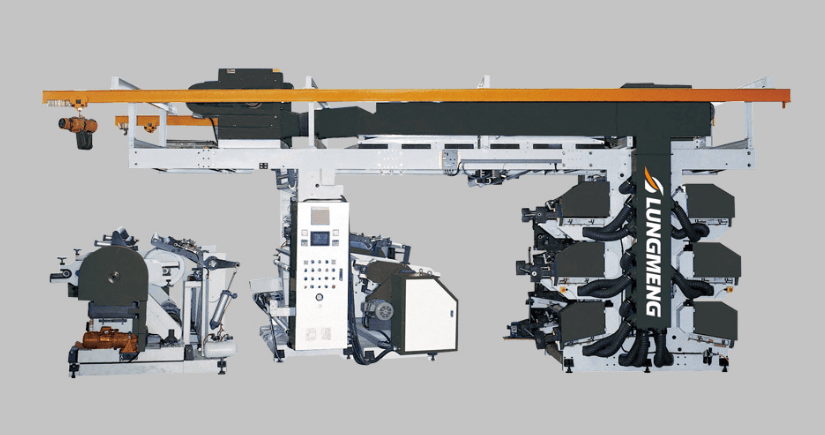
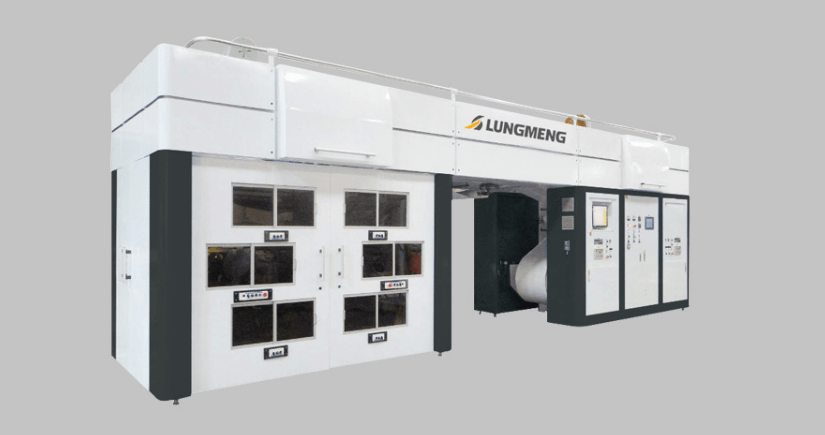
At the top of the range, Lung Meng’s CI (Central Impression) press delivers world-class registration accuracy and color stability — achieving zero-tolerance deviation even at full production speed.
Highlights:
See High Speed C.I. Flexographic Printing Press full specifications →

With these four options, converters can choose a model that fits their production scale, budget, and application — from compact 2-color setups to high-speed 8-color precision systems.
Each flexo model offers unique benefits, but the true efficiency gains come from the advanced technologies integrated into these presses.
* From single color to 2, 4, 6 or 8 colors
Beyond selecting the right press, several key technologies further enhance productivity and print consistency.
These technologies not only streamline operations but also deliver measurable business impact across key packaging applications.
Flexographic printing provides strong returns wherever speed, accuracy, and cost efficiency are key.Here are the most common applications where Lung Meng’s flexo systems deliver measurable ROI:
| Application | Substrate | Typical Feature |
|---|---|---|
| Food packaging | PE, PET films | Fast SKU change (~12 min) |
| Shrink sleeves | PETG 50–60 µm | 360° branding surface |
| Roll labels | BOPP, paper | Barcode & variable printing |
| Industrial films | PE multi-layer | High barrier durability |
| Barrier laminates | EVOH / foil | Low-VOC ink compatibility |
A mid-sized packaging converter in Southeast Asia faced a familiar challenge — frequent design changes, growing SKU demands, and mounting waste during setup. Each job change consumed nearly 20 minutes and wasted more than 100 meters of film, limiting throughput and profit margins.
To address these bottlenecks, the company upgraded to a Lung Meng 8-color CI Flexo Press equipped with automated registration and quick-change sleeve systems. The transition was completed within weeks, without disrupting production.
Within the first year, the team achieved measurable gains:
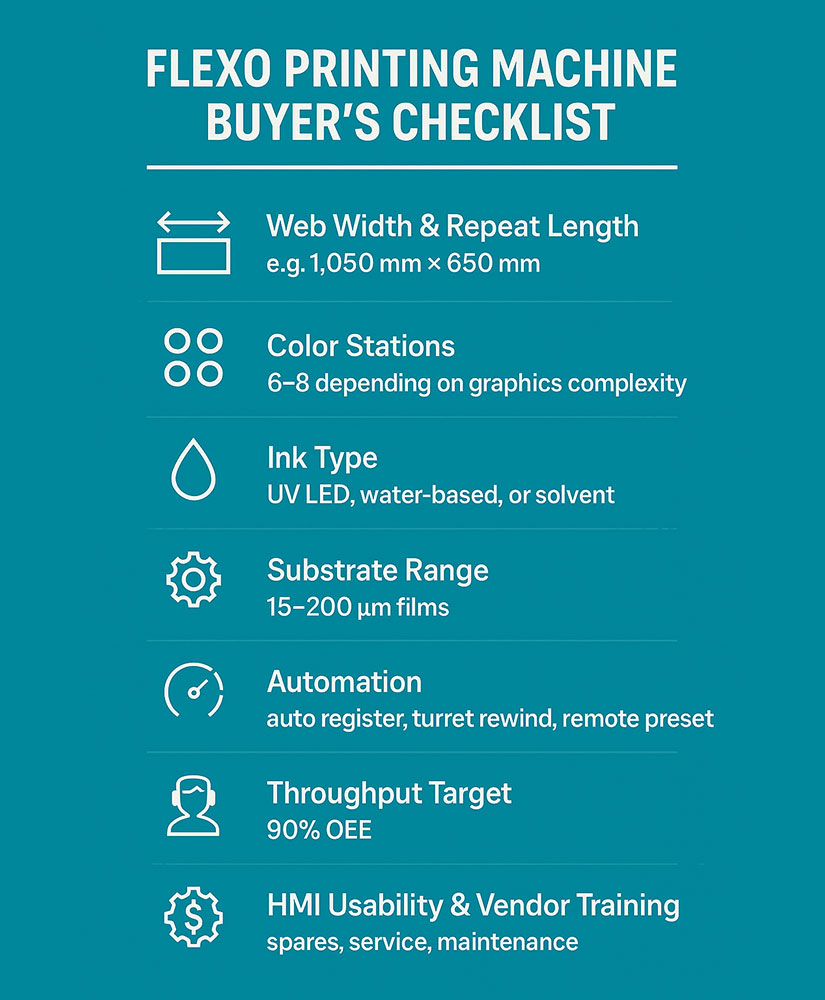
Before making your investment, verify these critical specifications to ensure your chosen press meets both current and future production needs:
Once you’ve reviewed these key specifications, the next question most buyers ask is simple — what else should I know before choosing my first flexo press? Let’s answer that with some of the most common questions from first-time flexo buyers.
Flexo delivers the best cost-efficiency for short to medium production runs (up to around 5 million impressions), while gravure is preferred for ultra-long jobs exceeding 20 million impressions.
Not really — flexo performs best on flexible films such as PE, PP, PET, and PVC. For rigid materials, screen or pad printing is more appropriate.
Typically up to 5 million impressions with proper care, including regular plate cleaning and controlled storage conditions.
UV inks cure instantly and produce minimal VOC emissions, while solvent inks provide stronger adhesion on slippery or treated films.
Depending on width, color stations, and automation level, prices typically range from US$10,000 to $150,000+.
Yes — modern flexo systems support water-based and UV inks that reduce VOC emissions and energy use, making them a sustainable choice for flexible packaging.
As flexographic technology continues to advance, the next wave of innovation is already shaping how converters print faster, smarter, and more sustainably.
As the industry moves toward greater sustainability and automation, new innovations are transforming the future of plastic printing.
These advancements show how flexographic printing continues to evolve — ensuring long-term relevance and profitability for converters. In this changing landscape, choosing the right flexo system becomes a strategic investment in both performance and sustainability.
The future of plastic packaging belongs to converters who can print smarter — faster, cleaner, and with greater consistency. That’s why flexographic printing has become the backbone of modern flexible packaging, combining high speed, low waste, and eco-friendly production into one scalable solution.
For converters, investing in flexo means more than just upgrading equipment — it’s building a foundation for sustainable growth and brand reliability.
With over 40 years of innovation, Lung Meng Machinery continues to lead this transformation, helping manufacturers around the world turn efficiency into opportunity and technology into long-term profit.
Contact Lung Meng Machinery to request a customized consultation and discover how to optimize your plastic printing line.